 WhatsApp Us (24/7)
 +91 926 888 0303 (24/7)


To Book an Appointment
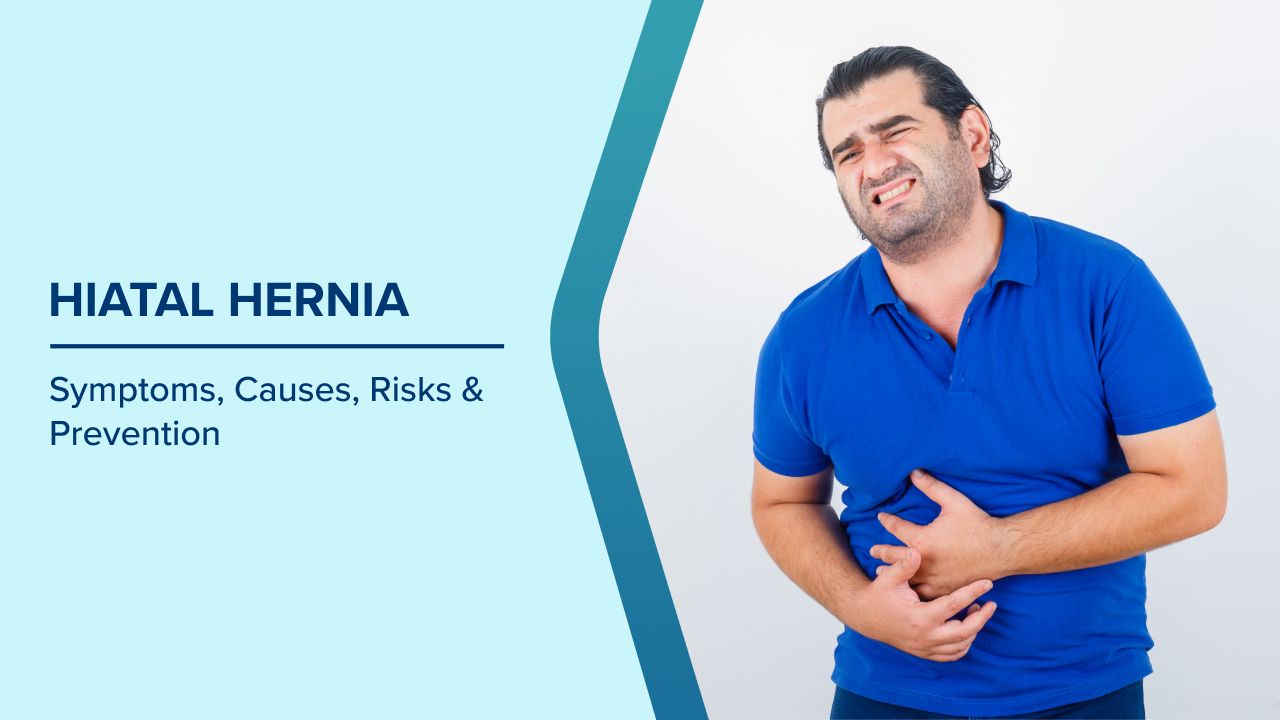
Call Us+91 926 888 0303Hiatal Hernia: Symptoms, Causes, Risks & Prevention
By Dr. Ashish Anand in Pulmonology
Jun 12 , 2026

Persistent chest burning, bloating, acid reflux, and upper abdominal discomfort are often dismissed as simple acidity. However, these symptoms may sometimes be linked to a Hiatal Hernia, a condition in which part of the stomach pushes upward through the diaphragm. Many people confuse acid reflux and hiatal hernia symptoms with occasional indigestion or GERD, delaying proper diagnosis. If digestive discomfort becomes frequent or worsens after meals or while lying down, medical evaluation may help identify the underlying cause and prevent complications.
What Is a Hiatal Hernia?
A hiatal hernia occurs when a portion of the stomach moves upward through the diaphragm into the chest area. The diaphragm normally separates the chest from the abdomen and helps prevent stomach acid from flowing upward.
When the opening in the diaphragm weakens or enlarges, part of the stomach can slip through it, affecting digestion and increasing reflux symptoms.
Small vs Large Hiatal Hernias
- Small hiatal hernias may cause little or no discomfort
- Larger hiatal hernias are more likely to cause reflux, chest burning, and swallowing difficulties
Common Symptoms of a Hiatal Hernia
Symptoms can vary, but many people experience ongoing digestive discomfort that resembles acidity or GERD.
Chest Burning or Heartburn
One of the most common hiatal hernia symptoms is a burning sensation in the chest.
- Often develops after meals
- May worsen at night or while lying down
- Can feel similar to severe acidity
Acid Reflux
A hiatal hernia often allows stomach acid to back up into the oesophagus. Common symptoms include:
- Sour or bitter taste in the mouth
- Regurgitation of food or acid
- Frequent stomach acid reflux
Bloating and Fullness
Many individuals experience pressure and discomfort after eating. Symptoms may include:
- Feeling unusually full after small meals
- Excessive belching
- Digestive discomfort after eating
Difficulty Swallowing
Some people feel as though food gets stuck while swallowing. This may cause:
- Tightness in the chest
- Pain while swallowing
- Discomfort after meals
Chest Discomfort
A hiatal hernia can also cause pressure or discomfort in the chest area. Symptoms may:
- Feel like heaviness or pressure
- Occur after eating
- Be confused with heart-related pain
A physician should always evaluate persistent chest discomfort.
Why Does a Hiatal Hernia Cause Chest Burning
The diaphragm normally helps keep stomach acid in the stomach. When a hiatal hernia develops, this barrier becomes weaker. As a result:
- Acid moves upward into the oesophagus
- The lining of the food pipe becomes irritated
- A burning sensation develops behind the chest bone
Symptoms often become worse:
- After large meals
- When lying flat
- During bending or lifting
- After overeating
This explains why many people notice worsening heartburn after meals or nighttime reflux.
Hiatal Hernia vs Acidity: How to Tell the Difference
Occasional acidity is common and usually improves quickly. However, symptoms linked to a hiatal hernia are often more persistent.
Signs It May Be More Than Simple Acidity
- Chest burning occurring several times a week
- Reflux symptoms despite taking medications
- Difficulty swallowing
- Frequent bloating and chest discomfort
- Persistent upper abdominal discomfort
- Symptoms worsening when lying down
Unlike temporary acidity, a hiatal hernia often causes recurring symptoms that interfere with daily life.
Risk Factors for Hiatal Hernia
Several factors increase the risk of developing a hiatal hernia.
Common Risk Factors
- Obesity or excess abdominal pressure
- Ageing and muscle weakening
- Pregnancy
- Chronic coughing
- Heavy lifting or straining
- Smoking
- Frequent overeating
These factors can weaken the diaphragm over time.
When Should You See a Doctor?
Certain symptoms should not be ignored.
Seek Medical Help If You Experience:
- Persistent chest burning or reflux
- Difficulty swallowing
- Ongoing vomiting or nausea
- Severe chest pain
- Unexplained weight loss
- Symptoms not improving with routine treatment
Medical evaluation is important to rule out complications and identify the exact cause of symptoms.
How Is a Hiatal Hernia Diagnosed?
Doctors use different tests to confirm the diagnosis and assess severity.
Common Diagnostic Methods
- Endoscopy to examine the oesophagus and stomach
- Barium swallow test to visualise the digestive tract
- Imaging tests such as X-rays or scans
These tests help determine whether symptoms are linked to a hiatal hernia or another digestive condition.
Treatment Options for Hiatal Hernia
Treatment depends on symptom severity and the extent of the hernia.
Lifestyle Changes
Lifestyle modifications are often the first and most effective step in controlling symptoms.
Helpful Changes
- Eat smaller meals
- Avoid spicy, oily, or trigger foods
- Do not lie down immediately after eating
- Maintain a healthy weight
- Sleep with the head slightly elevated
Medications
Doctors may prescribe medications to reduce acid production and improve reflux symptoms. Common medicines include:
- Antacids
- Acid-reducing medications
- Medicines that improve digestion and reflux control
These can help reduce irritation and chest burning.
Surgery
Surgery may be recommended if:
- Symptoms are severe
- Medications do not provide relief
- Swallowing problems develop
- Complications occur
Modern surgical approaches are often minimally invasive.
Can Hiatal Hernia Be Prevented?
Although not all hiatal hernias can be prevented, healthy habits may reduce the risk.
Prevention Tips
- Maintain a healthy weight
- Avoid overeating
- Stop smoking
- Improve posture after meals
- Avoid heavy straining or lifting
These measures reduce pressure on the abdomen and support digestive health.
Complications If Left Untreated
Untreated hiatal hernia symptoms can lead to long-term digestive complications.
Possible Complications Include:
- Severe GERD symptoms
- Inflammation of the oesophagus
- Difficulty swallowing
- Chronic irritation from acid reflux
Long-term reflux may affect quality of life and increase the risk of oesophageal damage.
Conclusion
A hiatal hernia can cause persistent chest burning, reflux, bloating, and digestive discomfort that many people mistake for routine acidity. Because symptoms often overlap with GERD and indigestion, diagnosis may be delayed. Recognising recurring reflux and upper abdominal discomfort is important for timely treatment and symptom control. Lifestyle modifications, medications, and medical evaluation can help manage symptoms effectively and reduce complications. If chest burning or digestive discomfort continues despite routine care, consulting a healthcare professional is the best step toward identifying the underlying cause.
Frequently Asked Questions
Can a hiatal hernia cause symptoms every day?
Yes, some individuals experience daily reflux, chest burning, or bloating, especially after meals or while lying down.
Is a hiatal hernia common after age 40?
Yes, the condition becomes more common with age because the muscles around the diaphragm may weaken over time.
Can stress worsen hiatal hernia symptoms?
Stress does not directly cause a hiatal hernia, but it can worsen reflux and digestive discomfort in many people.
Does a hiatal hernia always require surgery?
No, many people manage symptoms successfully with lifestyle changes and medications without surgery.
Can hiatal hernia symptoms mimic a heart attack?
Yes, chest pressure and burning may resemble heart-related pain, which is why a doctor should always evaluate severe chest symptoms.
Is walking helpful after meals for acid reflux symptoms?
Gentle walking after meals may support digestion and help reduce reflux by preventing stomach acid from moving upward.
Written and Verified by:

Related Blogs

Medical Expert Team
Jun 06 , 2015 | 2 min read

Blogs by Doctor
Painless Hemorrhoid Treatment with Laser & RFA
Dr. Ashish Anand In General Surgery , Laparoscopic / Minimal Access Surgery
Jul 31 , 2025 | 1 min read

Most read Blogs


Related Blogs
Medical Expert Team
Jun 06 , 2015 | 2 min read
Blogs by Doctor
Painless Hemorrhoid Treatment with Laser & RFA
Dr. Ashish Anand In General Surgery , Laparoscopic / Minimal Access Surgery
Jul 31 , 2025 | 1 min read
Most read Blogs