 WhatsApp Us (24/7)
 +91 926 888 0303 (24/7)


To Book an Appointment
Call Us+91 926 888 0303Pancreatic Cancer: Understanding Its Silent Progression
By Dr Anadi Pachaury in Surgical Oncology , Cancer Care / Oncology , Breast Cancer , Gynecologic Oncology , Gastro Intestinal & Hepatopancreatobiliary Surgical Oncology
Jan 05 , 2026 | 4 min read

Pancreatic cancer is often described as a silent disease, not because it lacks warning signs entirely, but because these signs appear quietly and subtly, often going unnoticed until the cancer has advanced. Unlike other cancers that may reveal themselves early through pain, bleeding, or visible growths, pancreatic cancer progresses deep within the abdomen, hidden from easy detection.
Understanding why this cancer remains silent for so long is key to improving awareness and promoting timely medical evaluation.
Why Pancreatic Cancer Progresses Silently
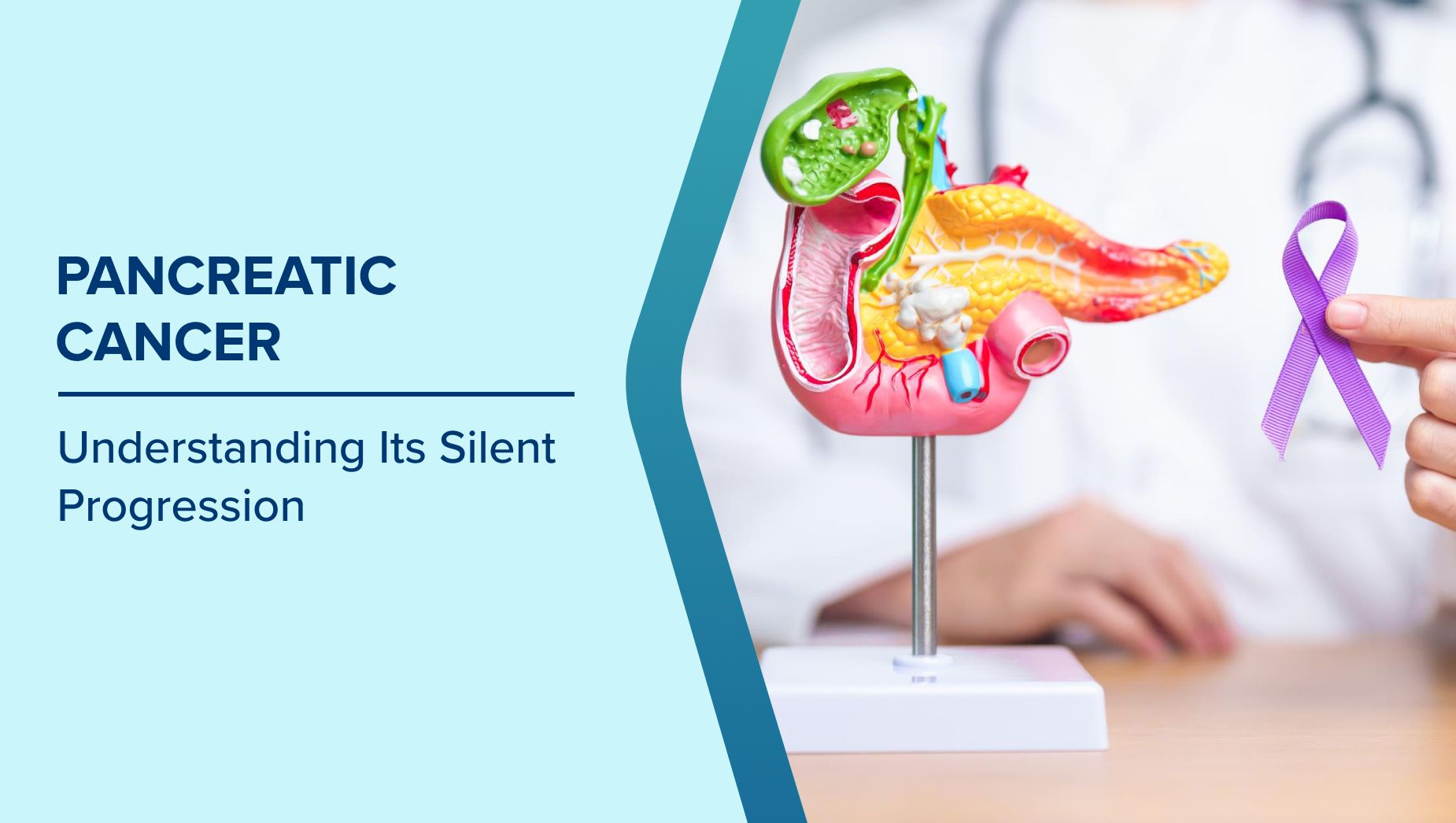
The pancreas is a small, vital organ located deep in the abdomen, tucked behind the stomach. Its concealed position means that tumours growing within it rarely cause noticeable changes in the early stages. In the beginning, these tumours are small and do not press on neighbouring organs or nerves. As a result, symptoms either don’t occur or are too mild to raise concern.
Moreover, because the pancreas has both digestive and hormonal functions, any discomfort that arises, such as bloating or mild abdominal pain, can easily be mistaken for more common digestive issues. This is why many people do not seek medical help until the disease has progressed significantly.
How Pancreatic Cancer Develops and Spreads
Pancreatic cancer typically begins when healthy cells in the pancreas start to mutate and grow uncontrollably, forming small, localised lesions. Over time, these lesions can turn into malignant tumours that invade nearby tissues.
One of the biggest challenges is the way pancreatic cancer spreads. The pancreas lies close to several major blood vessels and lymph nodes. Once cancer cells enter these structures, they can travel quickly to the liver, lungs, or other parts of the body.
This rapid local spread means that, by the time the disease produces noticeable symptoms, it is often already in an advanced or metastatic stage, making it more difficult to treat effectively.
Subtle Symptoms That Are Often Overlooked
While pancreatic cancer may progress quietly, the body does send signals, though they’re often vague and easily dismissed. Some of the early changes include:
- Persistent abdominal discomfort that seems unrelated to meals
- Back pain that worsens when lying down
- Unexplained fatigue or loss of energy
- Gradual, unintentional weight loss
- Reduced appetite or a feeling of fullness after small meals
As the tumour grows or affects the bile duct, jaundice, characterised by the yellowing of the skin and eyes, may develop. However, this typically appears later in the disease. Because most of these symptoms mimic less serious conditions, they are often overlooked, contributing to delayed diagnosis.
The Role of Risk Factors in Accelerating Progression
While pancreatic cancer can affect anyone, certain factors can make its progression faster or more likely. People with chronic inflammation of the pancreas (chronic pancreatitis) may experience cell damage over time that raises cancer risk. Similarly, long-term tobacco use and heavy alcohol consumption can harm pancreatic tissue, creating an environment where abnormal cells are more likely to develop.
People with a family history of pancreatic cancer or inherited genetic mutations like BRCA or Lynch syndrome should remain particularly cautious and undergo regular monitoring. Likewise, sudden changes in blood sugar control or the onset of diabetes later in life, particularly without an obvious cause, can sometimes signal underlying pancreatic changes that warrant further evaluation.
Why Early Detection Remains a Challenge
Detecting pancreatic cancer early is not straightforward. Routine screening is not available because there are no reliable, specific biomarkers or blood tests that can accurately identify the disease in its earliest stages.
Most imaging tests, such as CT scans, MRIs, or endoscopic ultrasounds, are typically performed only when symptoms or abnormalities appear. This diagnostic gap means that, for many people, pancreatic cancer is discovered incidentally or during investigations for unrelated problems.
Bridging the Gap: What Can Be Done
While the silent nature of pancreatic cancer makes early detection difficult, greater awareness can make a difference. Paying attention to subtle bodily changes, particularly persistent digestive issues or unexplained weight loss, can prompt earlier consultation with a healthcare provider.
People at higher risk should discuss proactive screening options with their doctors, especially if they have a family history or known genetic predisposition.
Equally important is multidisciplinary care, where gastroenterologists, oncologists, radiologists, and surgeons collaborate to assess suspicious findings swiftly. Such coordinated efforts can improve diagnostic speed and expand treatment opportunities even in complex cases.
Conclusion
The silence surrounding pancreatic cancer lies not in the absence of warning signs, but in how easily they blend into everyday health concerns. The organ’s hidden position, the disease’s slow build-up, and its subtle symptoms make it one of the most challenging cancers to catch early.
However, recognising that even mild or persistent digestive changes deserve medical attention can make a difference. Awareness, vigilance, and continued advancements in medical technology offer hope for detecting this disease sooner and improving outcomes for those affected.
FAQs
Why is pancreatic cancer often called a “silent disease”?
Because it develops deep within the abdomen and produces few or vague symptoms in its early stages, pancreatic cancer often remains undetected until it has spread to other areas.
Can routine health check-ups detect pancreatic cancer?
Standard check-ups may not include specialised imaging or tumour markers for pancreatic cancer. However, any persistent, unexplained symptoms noted during a consultation may prompt further testing.
What makes pancreatic cancer progress faster than some other cancers?
Its proximity to major blood vessels and lymph nodes allows cancer cells to spread more quickly throughout the body once the disease begins advancing.
How can awareness help in reducing late-stage diagnoses?
Understanding that persistent abdominal pain, unexplained fatigue, or sudden-onset diabetes can signal pancreatic changes encourages people to seek evaluation earlier, improving the chances of timely detection.
Can lifestyle changes reduce the risk of developing pancreatic cancer?
Although pancreatic cancer cannot always be prevented, making healthy lifestyle choices can help reduce the risk. Quitting smoking, moderating alcohol consumption, eating a nutritious diet with plenty of fruits and vegetables, and managing conditions such as diabetes or obesity can promote better pancreatic health and lower the overall risk of cancer.
Written and Verified by:

Related Blogs

Dr. S. VEDA PADMA PRIYA In Surgical Oncology , Cancer Care / Oncology
May 16 , 2016 | 2 min read

Dr. Kanika Batra Modi In Surgical Oncology , Cancer Care / Oncology
May 26 , 2016 | 4 min read
Blogs by Doctor

Gastrointestinal Cancers: Types, Early Signs, Screening & Treatment
Dr Anadi Pachaury In Cancer Care / Oncology , Breast Cancer , Head & Neck Oncology , Robotic Surgery
Oct 25 , 2021 | 2 min read

Link Between Obesity and Breast Cancer: Understanding the Risks and Taking Action
Dr Anadi Pachaury In Cancer Care / Oncology , Breast Cancer
Oct 22 , 2025 | 4 min read
Most read Blogs


Related Blogs
Dr. S. VEDA PADMA PRIYA In Surgical Oncology , Cancer Care / Oncology
May 16 , 2016 | 2 min read
Dr. Kanika Batra Modi In Surgical Oncology , Cancer Care / Oncology
May 26 , 2016 | 4 min read
Blogs by Doctor
Gastrointestinal Cancers: Types, Early Signs, Screening & Treatment
Dr Anadi Pachaury In Cancer Care / Oncology , Breast Cancer , Head & Neck Oncology , Robotic Surgery
Oct 25 , 2021 | 2 min read
Link Between Obesity and Breast Cancer: Understanding the Risks and Taking Action
Dr Anadi Pachaury In Cancer Care / Oncology , Breast Cancer
Oct 22 , 2025 | 4 min read
Most read Blogs