 WhatsApp Us (24/7)
 +91 926 888 0303 (24/7)


To Book an Appointment
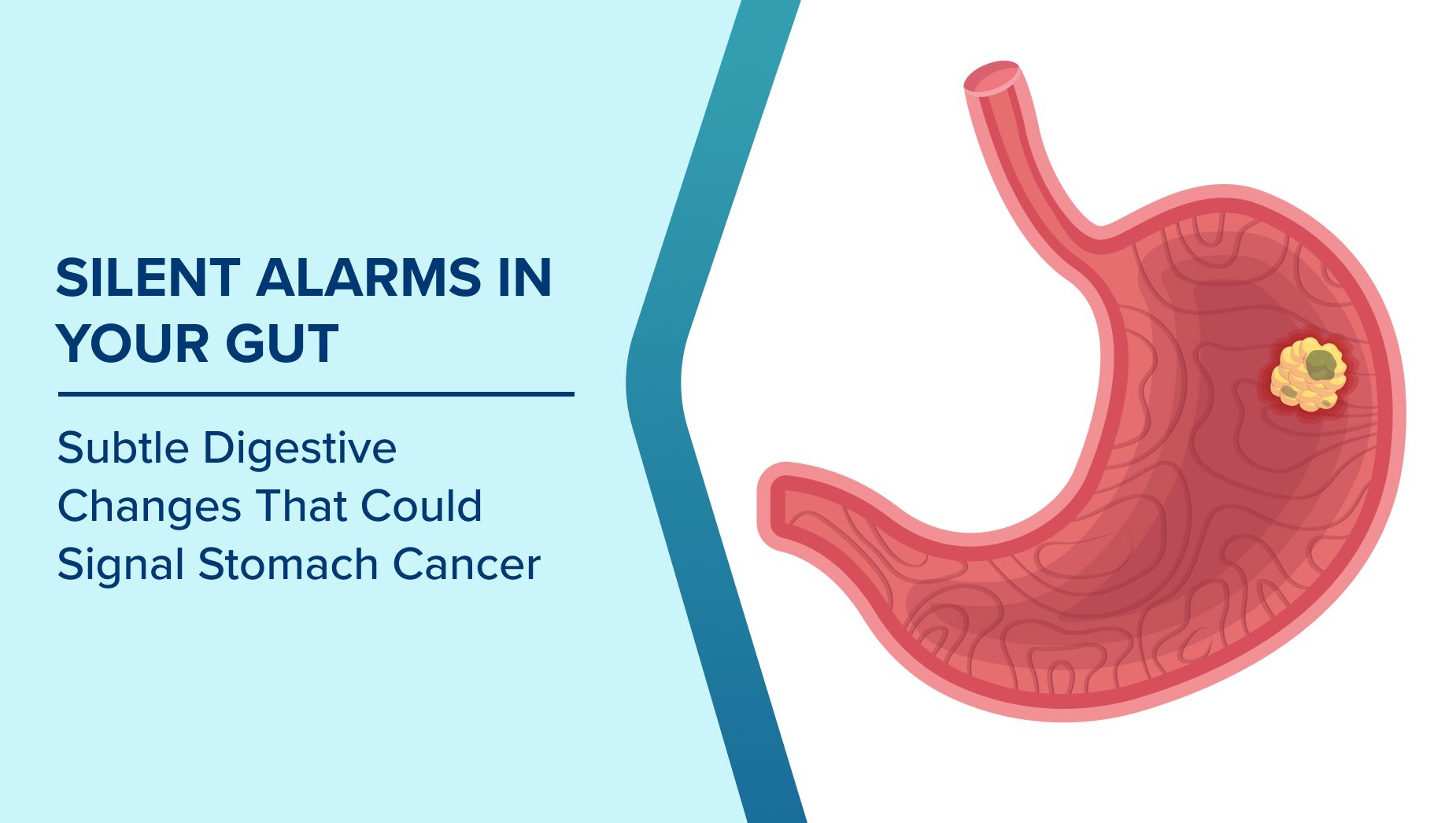
Call Us+91 926 888 0303Silent Alarms in Your Gut: Subtle Digestive Changes That Could Signal Stomach Cancer
By Medical Expert Team
Dec 01 , 2025 | 5 min read

Most of us brush off mild digestive discomfort, a bit of bloating after meals, a touch of heartburn, or a sense of fullness that comes sooner than expected. These everyday issues are often blamed on stress, poor eating habits, or lack of sleep. However, sometimes, such subtle changes in your gut may be your body’s way of sounding an early alarm.
Stomach cancer, also called gastric cancer, can develop quietly over months or even years. In its early stages, it often shows vague, easily overlooked symptoms. Recognising these early signs and seeking timely medical advice can make a significant difference in treatment success and recovery.
Understanding Stomach Cancer
Stomach cancer begins when abnormal cells grow uncontrollably in the lining of the stomach. Over time, these cells can form a gastric tumour and spread to nearby tissues or other parts of the body.
Most stomach cancers start in the innermost layer of the stomach, known as the mucosa. They typically develop slowly, which is why early detection plays a crucial role in improving outcomes. Unfortunately, symptoms in the beginning may be mild or mistaken for common digestive problems.
Early diagnosis gives doctors more options for minimally invasive stomach cancer surgery, better response to treatment, and improved survival rates. Understanding what causes stomach cancer and identifying early signs of gastric cancer can help individuals take timely action.
Subtle Digestive Changes You Should Never Ignore
Our digestive system sends signals when something isn’t right. While not every stomach ache means cancer, certain persistent or unusual changes should not be ignored. These are often the early warning signs of stomach cancer that many people dismiss as routine indigestion.
- Persistent Indigestion or Bloating: Occasional indigestion is common, but when it becomes frequent or lasts for weeks, it could be a red flag. Continuous bloating, discomfort, or burning sensations after meals may suggest more than just acidity.
- Feeling Full Too Quickly: If you find yourself unable to finish a meal or feeling full after just a few bites, it could indicate a problem with stomach function. Tumors in the stomach can interfere with its ability to expand normally.
- Unexplained Nausea or Heartburn: Recurring nausea or heartburn that doesn’t improve with medication should never be ignored. These symptoms may result from irritation or obstruction in the stomach lining caused by abnormal cell growth.
- Loss of Appetite: A sudden aversion to food, especially meat or heavy meals, can sometimes be an early digestive issue that could mean cancer. Loss of appetite, when persistent, deserves medical attention.
- Fatigue and Unintentional Weight Loss: Losing weight without dieting or exercise can be one of the more noticeable stomach cancer early detection signs. Fatigue often follows because the body isn’t absorbing nutrients efficiently.
- Stomach Pain or Discomfort: Mild abdominal pain that comes and goes is easy to overlook. However, ongoing discomfort, especially in the upper abdomen, may need further investigation.
- Vomiting or Blood in Stool: Although these are later-stage symptoms, noticing any trace of blood in vomit or stools requires immediate medical attention.
Possible Causes and Risk Factors
Understanding the risk factors for stomach cancer can help you make informed lifestyle changes that reduce your risk of developing it. While anyone can get stomach cancer, certain factors can increase the risk.
Non-modifiable Risk Factors
- Age: Most cases occur in people over 50.
- Gender: Men are slightly more prone than women.
- Family History: A close relative with gastric cancer raises your personal risk.
- Genetic Conditions: Certain inherited syndromes, such as Lynch syndrome, can increase susceptibility.
Modifiable Risk Factors
- H. pylori Infection: Chronic infection with Helicobacter pylori bacteria is one of the leading causes of stomach ulcers and cancer.
- Unhealthy Diet: Diets高 in smoked, salted, or processed foods can damage the stomach lining over time.
- Smoking and Alcohol: Tobacco and excessive alcohol irritate the stomach and increase cancer risk.
- Obesity: Being overweight can promote inflammation, a known factor in cancer development.
Recognising these factors early allows you to take preventive measures such as treating infections, quitting smoking, and maintaining a balanced diet.
How Stomach Cancer is Diagnosed
When symptoms persist, your doctor will recommend tests to determine the underlying cause. The goal is to detect cancer as early as possible, before it spreads.
- Upper Endoscopy: One of the most accurate methods for diagnosis. A thin tube with a camera is inserted to examine the stomach lining. A biopsy may be taken if needed.
- Imaging Tests: CT scans, MRI, or PET scans provide detailed images to check spread.
- Blood Tests: These can show anaemia or abnormalities but cannot confirm cancer.
- Endoscopic Ultrasound (EUS): Helps assess tumour depth and lymph node involvement.
- Stool or Breath Tests for H. pylori: Detects bacteria linked to stomach cancer.
Early and accurate diagnosis allows doctors to plan the most effective treatment strategy and improve recovery outcomes.
Treatment Options and Medical Care
Modern medicine offers several effective stomach cancer treatments, tailored to each patient’s stage and health condition.
Surgery
Surgery remains one of the main treatments. Minimally invasive stomach cancer surgery helps faster recovery with less pain.
Chemotherapy
Chemotherapy uses drugs to destroy cancer cells and can be used before or after surgery.
Radiation Therapy
This treatment uses high-energy rays to target and destroy cancer cells.
Targeted Therapy
Uses specialised drugs that attack cancer-specific molecules.
Immunotherapy
Immunotherapy boosts the body’s natural defence system to fight cancer.
Advances in the latest treatments have improved survival rates and quality of life.
Lifestyle Choices for Prevention and Recovery
Healthy habits significantly lower your risk and support recovery.
- Eat a Balanced Diet: Fresh fruits, vegetables, and whole grains.
- Avoid Tobacco and Alcohol: Protects digestive health.
- Maintain a Healthy Weight: Exercise and portion control.
- Treat H. pylori Infection Promptly: Follow doctor's advice.
- Go for Regular Screenings: Especially with family history.
A healthy lifestyle supports both prevention and recovery.
Conclusion
Your gut often whispers before it shouts. Persistent indigestion or unusual bloating may be early warning signs.
Early awareness and modern treatment can change outcomes. If symptoms persist, consult a gastroenterologist.
Frequently Asked Questions
Can stress cause stomach cancer?
Stress does not directly cause stomach cancer, but it can worsen digestive symptoms.
What age group is most at risk for stomach cancer?
Mostly people aged 50 and above.
How can I determine if indigestion is serious?
If it lasts more than two weeks or shows additional symptoms, consult a doctor.
Are there genetic tests for stomach cancer risk?
Yes, genetic testing is available for high-risk individuals.
What foods help in stomach cancer recovery?
Soft, nutrient-rich foods like lean proteins, vegetables, and grains.
Can stomach cancer be cured completely?
Yes, if detected early. Outcomes depend on the stage and overall health.
Related Blogs

Dr. S. VEDA PADMA PRIYA In Surgical Oncology , Cancer Care / Oncology
May 16 , 2016 | 2 min read

Dr. Kanika Batra Modi In Surgical Oncology , Cancer Care / Oncology
May 26 , 2016 | 4 min read
Blogs by Doctor

Medical Expert Team
Mar 30 , 2021 | 2 min read
Gallbladder Wall Thickening & Cancer: Symptoms, Risks, and Diagnosis
Medical Expert Team
Jun 23 , 2025 | 1 min read
Most read Blogs


Related Blogs
Dr. S. VEDA PADMA PRIYA In Surgical Oncology , Cancer Care / Oncology
May 16 , 2016 | 2 min read
Dr. Kanika Batra Modi In Surgical Oncology , Cancer Care / Oncology
May 26 , 2016 | 4 min read
Blogs by Doctor
Medical Expert Team
Mar 30 , 2021 | 2 min read
Gallbladder Wall Thickening & Cancer: Symptoms, Risks, and Diagnosis
Medical Expert Team
Jun 23 , 2025 | 1 min read
Most read Blogs