 WhatsApp Us (24/7)
 +91 926 888 0303 (24/7)


To Book an Appointment
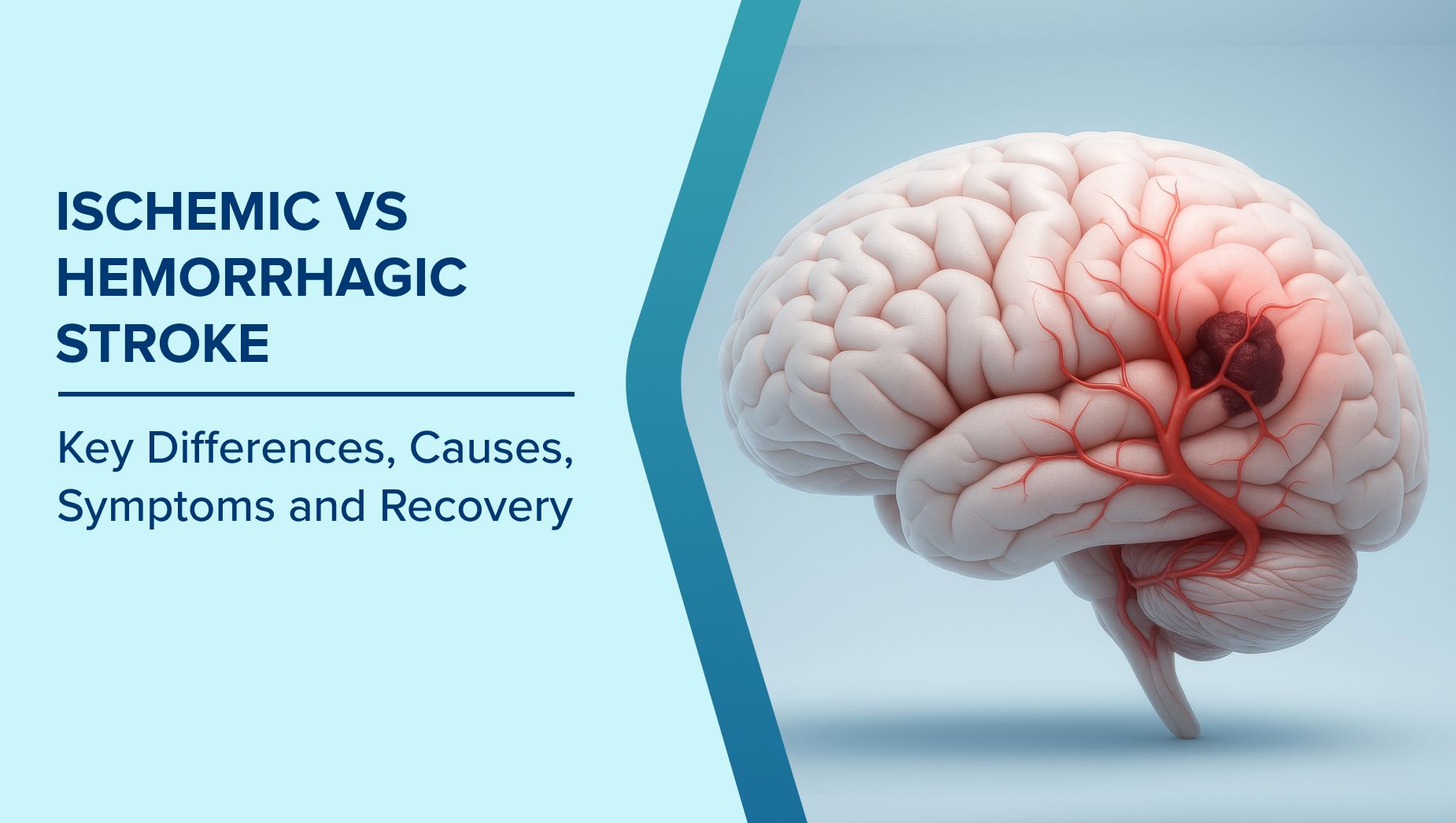
Call Us+91 926 888 0303Ischemic vs Hemorrhagic Stroke: Symptoms and Causes
By Dr. Arun Saroha in Neurosurgery , Neurosciences , Spine Surgery
Apr 16 , 2026 | 5 min read

A stroke is a critical health emergency that occurs when the blood supply to a part of the brain is interrupted or reduced. This disruption limits the delivery of oxygen and essential nutrients, which are necessary for proper brain function. Without oxygen and nutrients, brain cells begin to die within minutes, which can lead to long-term disability or even death if not treated quickly.
Strokes are broadly categorised into two primary forms: ischemic strokes and hemorrhagic strokes. While both affect the brain and may show similar symptoms, they differ in their causes, severity, and treatment approaches. Specialists at Max Hospital Gurugram stress the importance of early detection and rapid treatment to improve recovery outcomes.
What Is an Ischemic Stroke?
An ischemic stroke happens when the flow of blood to a part of the brain is obstructed, usually because of a clot in a blood vessel. This obstruction prevents oxygenated blood from reaching parts of the brain, which can result in injury to brain cells due to a lack of oxygen.
It is the most common type of stroke, accounting for about 85% of all cases.
Common causes include:
- Blood clots forming in the brain arteries
- Narrowing of arteries due to plaque buildup (atherosclerosis)
- Clots travelling from the heart to the brain (embolism)
- Irregular heart rhythms such as atrial fibrillation
Common symptoms:
- Sudden numbness or weakness, especially on one side of the body
- Difficulty speaking or understanding speech
- Sudden vision problems
- Trouble walking, dizziness, or loss of coordination
Treatment:
The goal is to restore blood flow as quickly as possible. Treatment options may include clot-dissolving medications, mechanical clot removal, or procedures to open narrowed arteries. Early intervention greatly improves recovery chances.
What Is a Hemorrhagic Stroke?
A hemorrhagic stroke happens when a blood vessel in the brain bursts, leading to bleeding either within the brain tissue or in the surrounding areas. This bleeding increases intracranial pressure and damages surrounding cells. Although less common, it is often more severe and requires immediate medical care.
Common causes include:
- Long-standing high blood pressure
- Ruptured brain aneurysm
- Abnormal blood vessel connections (arteriovenous malformations)
- Head injuries
- Excessive use of blood-thinning medications
Common symptoms:
- Suddenly, severe headache
- Nausea and vomiting
- Loss of consciousness
- Seizures
- Weakness or paralysis on one side of the body
Treatment:
Treatment focuses on stopping the bleeding and reducing intracranial pressure. This may involve medications to control blood pressure, reversing blood thinners, or surgery to repair blood vessels or remove accumulated blood.
Key Differences Between Ischemic and Hemorrhagic Stroke
An ischemic stroke occurs when blood flow to the brain is interrupted by an obstruction in a blood vessel. In contrast, a hemorrhagic stroke arises when a blood vessel ruptures, leading to bleeding either within the brain tissue or in the surrounding areas. Ischemic strokes are far more common, but hemorrhagic strokes tend to be more severe.
Risk factors also differ: ischemic strokes are often linked to heart disease, high cholesterol, and irregular heart rhythms, whereas hemorrhagic strokes are commonly associated with high blood pressure, aneurysms, and vascular abnormalities.
Treatment objectives differ depending on the type of stroke. In cases of ischemic stroke, the primary aim is to reestablish proper blood circulation to the affected area of the brain. In contrast, managing a hemorrhagic stroke centres on controlling and halting the bleeding, as well as reducing the buildup of pressure within the brain.
Recognising Stroke Symptoms: The FAST Rule
Early recognition can save lives. The FAST method helps identify stroke symptoms quickly:
- F – Face drooping
- A – Arm weakness
- S – Speech difficulty
- T – Time to seek emergency help
If any of these signs develop unexpectedly, it is essential to seek medical help without delay.
Comprehensive Stroke Care at Max Hospital, Gurugram
Patients receive care from a multidisciplinary team that includes neurologists, neurosurgeons, emergency physicians, and rehabilitation specialists. Advanced imaging and modern treatment techniques allow for quick diagnosis and personalised care for both types of strokes.
Conclusion
Ischemic and hemorrhagic strokes differ mainly in their causes, one results from a blocked blood vessel, while the other is due to bleeding in the brain. Despite these differences, both are life-threatening emergencies that require immediate treatment.
Recognising symptoms early and seeking prompt care at a specialised facility like Max Hospital Gurugram can significantly improve survival rates and recovery outcomes.
Written and Verified by:

Related Blogs

Dr. Sanjeev Kumar Gupta In Neurosurgery , Neurosciences
Jun 30 , 2016 | 2 min read

Dr. Sonal Gupta In Neurosurgery , Neurosciences
Jul 20 , 2016 | 2 min read
Blogs by Doctor

Does Brain Tumor Mean That I Am Suffering from Cancer?
Dr. Arun Saroha In Neurosurgery , Neurosciences
Feb 12 , 2018 | 2 min read

Slip Disc: Types, Risk Factors and Treatment
Dr. Arun Saroha In Neurosurgery , Neurosciences , Spine Surgery
Jan 24 , 2024 | 6 min read
Most read Blogs


Related Blogs
Dr. Sanjeev Kumar Gupta In Neurosurgery , Neurosciences
Jun 30 , 2016 | 2 min read
Dr. Sonal Gupta In Neurosurgery , Neurosciences
Jul 20 , 2016 | 2 min read
Blogs by Doctor
Does Brain Tumor Mean That I Am Suffering from Cancer?
Dr. Arun Saroha In Neurosurgery , Neurosciences
Feb 12 , 2018 | 2 min read
Slip Disc: Types, Risk Factors and Treatment
Dr. Arun Saroha In Neurosurgery , Neurosciences , Spine Surgery
Jan 24 , 2024 | 6 min read
Most read Blogs