 WhatsApp Us (24/7)
 +91 926 888 0303 (24/7)


To Book an Appointment
Call Us+91 926 888 0303FAST Action Saves Lives: Recognising Early Signs of Stroke
By Dr. Arun Saroha in Neurosurgery , Neurosciences , Spine Surgery
Oct 27 , 2025 | 2 min read

A stroke is a serious medical condition that happens when a blood vessel in the brain becomes blocked or ruptures, preventing oxygen and nutrients from reaching brain cells. Within minutes, brain cells begin to die. Consequently, strokes are one of the leading causes of death and lasting disability worldwide. But here’s the hopeful part — acting quickly can save lives and reduce long-term damage. Recognising the early signs of stroke and responding FAST is the key.
Why Time Matters
During a stroke, every second counts. Early treatment improves the likelihood of a full recovery. Delays can result in permanent brain damage, disability, or even death. In fact, doctors often say, “time lost is brain lost.” That’s why understanding how to spot a stroke quickly is essential for everyone.
The FAST Test: A Simple Way to Recognise Stroke
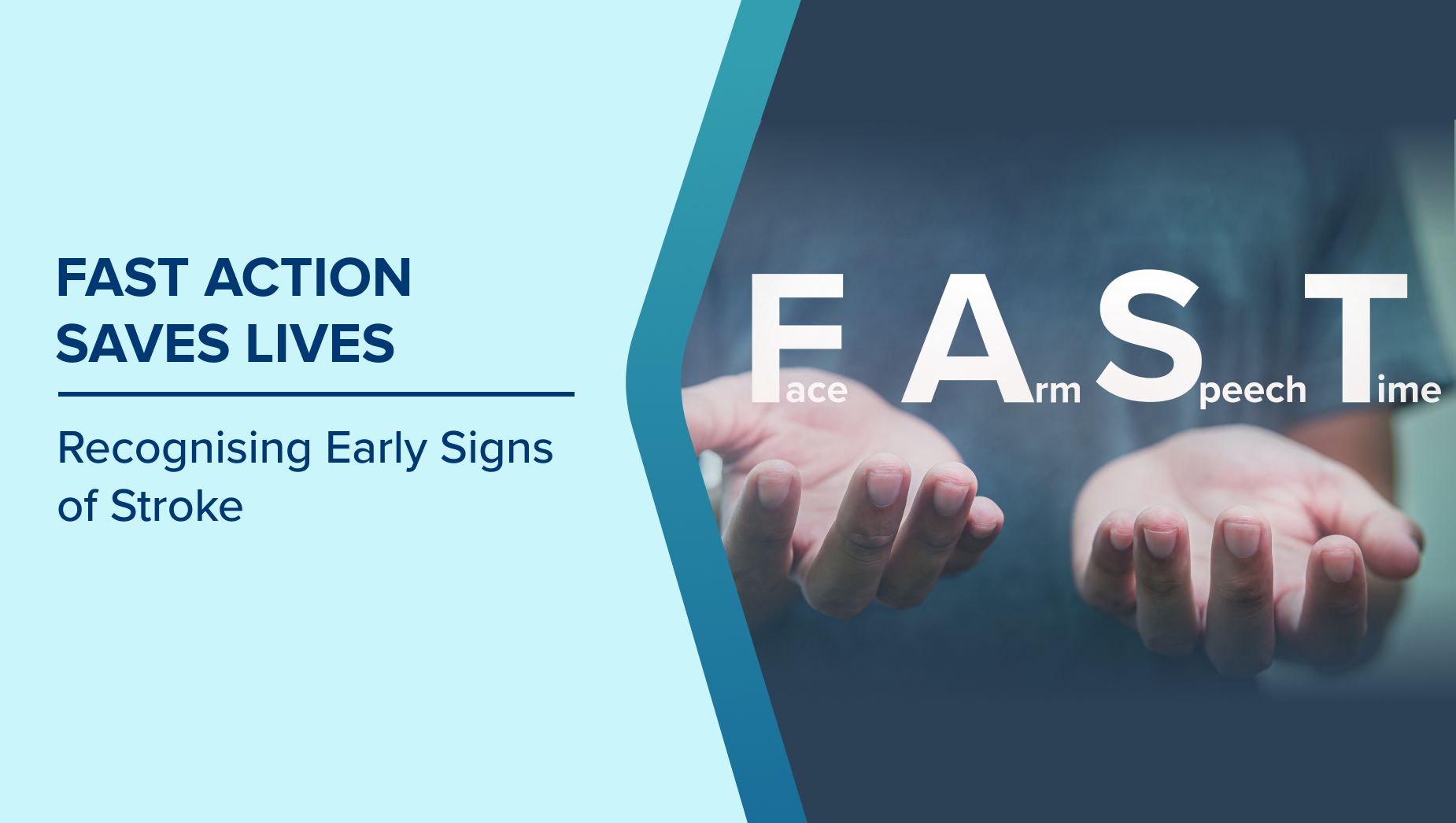
To help people remember the warning signs, experts use the acronym FAST:
- F: Face drooping — Ask the person to smile and observe whether one side of the face droops or feels numb.
- A: Arm weakness — Ask them to raise both arms and observe whether one arm drifts downward or feels weak.
- S: Speech difficulty — Is their speech slurred, strange, or hard to understand? Can they repeat a simple sentence correctly?
- T: Time to call emergency services — If you notice any of these signs, call for immediate medical help.
Using FAST can make the difference between recovery and long-term disability.
Other Warning Signs of Stroke
While FAST covers the most common symptoms, other signs may also appear, such as:
- Sudden confusion or trouble understanding speech.
- Sudden vision problems in one or both eyes.
- Sudden trouble walking, dizziness, or loss of balance.
- Severe, sudden headache with no known cause.
If you notice any of these symptoms, don’t wait — get medical help right away.
What to Do If Stroke is Suspected
If you suspect someone is having a stroke:
- Call emergency services immediately: Do not wait to see if symptoms improve.
- Note the time symptoms began: This helps doctors determine treatment options.
- Keep the person safe and comfortable: Help them lie down with their head slightly raised.
Stay calm and provide reassurance until help arrives.
Prevention is Key
While knowing the signs of stroke is crucial, prevention plays an equally important role. The major risk factors for stroke include high blood pressure, diabetes, high cholesterol, smoking, obesity, and lack of physical activity. Adopting a healthy lifestyle, regular exercise, a balanced diet, quitting smoking, limiting alcohol, and managing medical conditions can significantly reduce your risk.
Conclusion
Stroke can strike suddenly and without warning, but recognising the symptoms and acting FAST can save lives. Remember: Face, Arms, Speech, Time. Share this knowledge with family and friends, because the more people who understand FAST, the more lives can be saved. Quick action not only saves lives but also preserves the quality of life. When it comes to stroke, every second truly counts.
Written and Verified by:

Related Blogs

Dr. Sanjeev Kumar Gupta In Neurosurgery , Neurosciences
Jun 30 , 2016 | 2 min read

Dr. Sonal Gupta In Neurosurgery , Neurosciences
Jul 20 , 2016 | 2 min read
Blogs by Doctor

Does Brain Tumor Mean That I Am Suffering from Cancer?
Dr. Arun Saroha In Neurosurgery , Neurosciences
Feb 12 , 2018 | 2 min read

Slip Disc: Types, Risk Factors and Treatment
Dr. Arun Saroha In Neurosurgery , Neurosciences , Spine Surgery
Jan 24 , 2024 | 6 min read
Most read Blogs


Related Blogs
Dr. Sanjeev Kumar Gupta In Neurosurgery , Neurosciences
Jun 30 , 2016 | 2 min read
Dr. Sonal Gupta In Neurosurgery , Neurosciences
Jul 20 , 2016 | 2 min read
Blogs by Doctor
Does Brain Tumor Mean That I Am Suffering from Cancer?
Dr. Arun Saroha In Neurosurgery , Neurosciences
Feb 12 , 2018 | 2 min read
Slip Disc: Types, Risk Factors and Treatment
Dr. Arun Saroha In Neurosurgery , Neurosciences , Spine Surgery
Jan 24 , 2024 | 6 min read
Most read Blogs