 WhatsApp Us (24/7)
 +91 926 888 0303 (24/7)


To Book an Appointment
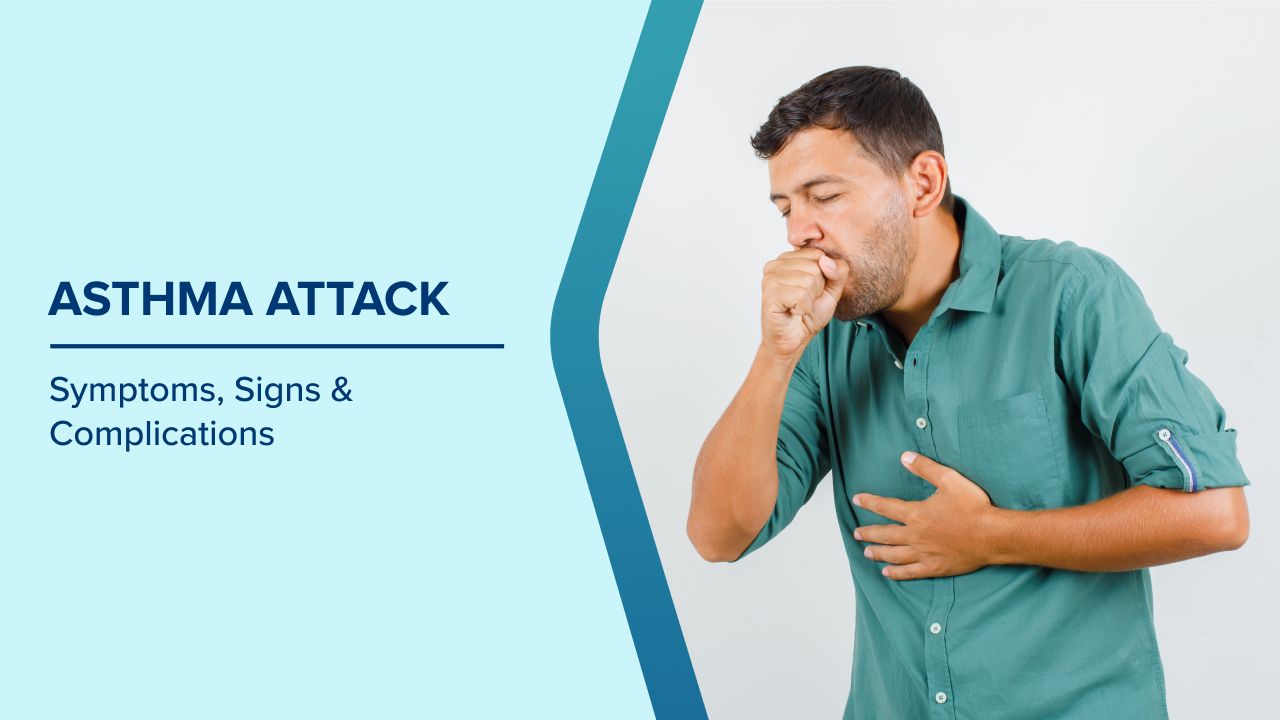
Call Us+91 926 888 0303What Happens During Asthma Attack: Symptoms, Signs & Complications
By Dr Kashish Dutta in Pulmonology
May 07 , 2026

An asthma attack happens when the airways become inflamed, constricted, and filled with excess mucus, leading to difficulty in breathing. It is often triggered by allergens, irritants, infections, or physical exertion.
During an attack, three main changes take place in the airways. First, the muscles around the airways tighten, a condition known as bronchospasm. Second, the lining of the airways becomes swollen due to inflammation. Third, excess mucus is produced, which clogs the already narrowed passages. Together, these changes restrict airflow and make breathing laboured.
Common Symptoms of an Asthma Attack
Symptoms may range from mild to severe and can appear either suddenly or over time. Common asthma symptoms include:
- Wheezing (a whistling sound while breathing)
- Shortness of breath
- Chest tightness
- Persistent coughing, especially at night
In severe cases, a person may struggle to speak, feel extreme fatigue, or experience a drop in oxygen levels, which requires immediate medical attention.
Early Warning Signs
Before a full asthma attack, early signs may appear, such as increased coughing, mild breathlessness, or disturbed sleep. Recognising these signs early can help prevent worsening symptoms.
What to Do During an Asthma Attack
Quick action is essential. Using a prescribed reliever inhaler helps relax airway muscles and restore airflow. Staying calm and sitting upright can also ease breathing. If symptoms do not improve, medical help should be sought immediately.
Conclusion
Understanding what happens during an asthma attack can help individuals respond quickly and manage symptoms effectively. With proper asthma management and timely treatment, most attacks can be controlled, reducing the risk of serious complications.
Written and Verified by:

Related Blogs

Medical Expert Team
Jun 06 , 2015 | 2 min read

Most read Blogs


Related Blogs
Medical Expert Team
Jun 06 , 2015 | 2 min read
Most read Blogs