 WhatsApp Us (24/7)
 +91 926 888 0303 (24/7)


To Book an Appointment
Call Us+91 926 888 0303Nuclear Medicine: Its Role in Diagnosing Heart Diseases
By Dr Shashwat Verma in Nuclear Medicine
Nov 10 , 2025 | 4 min read

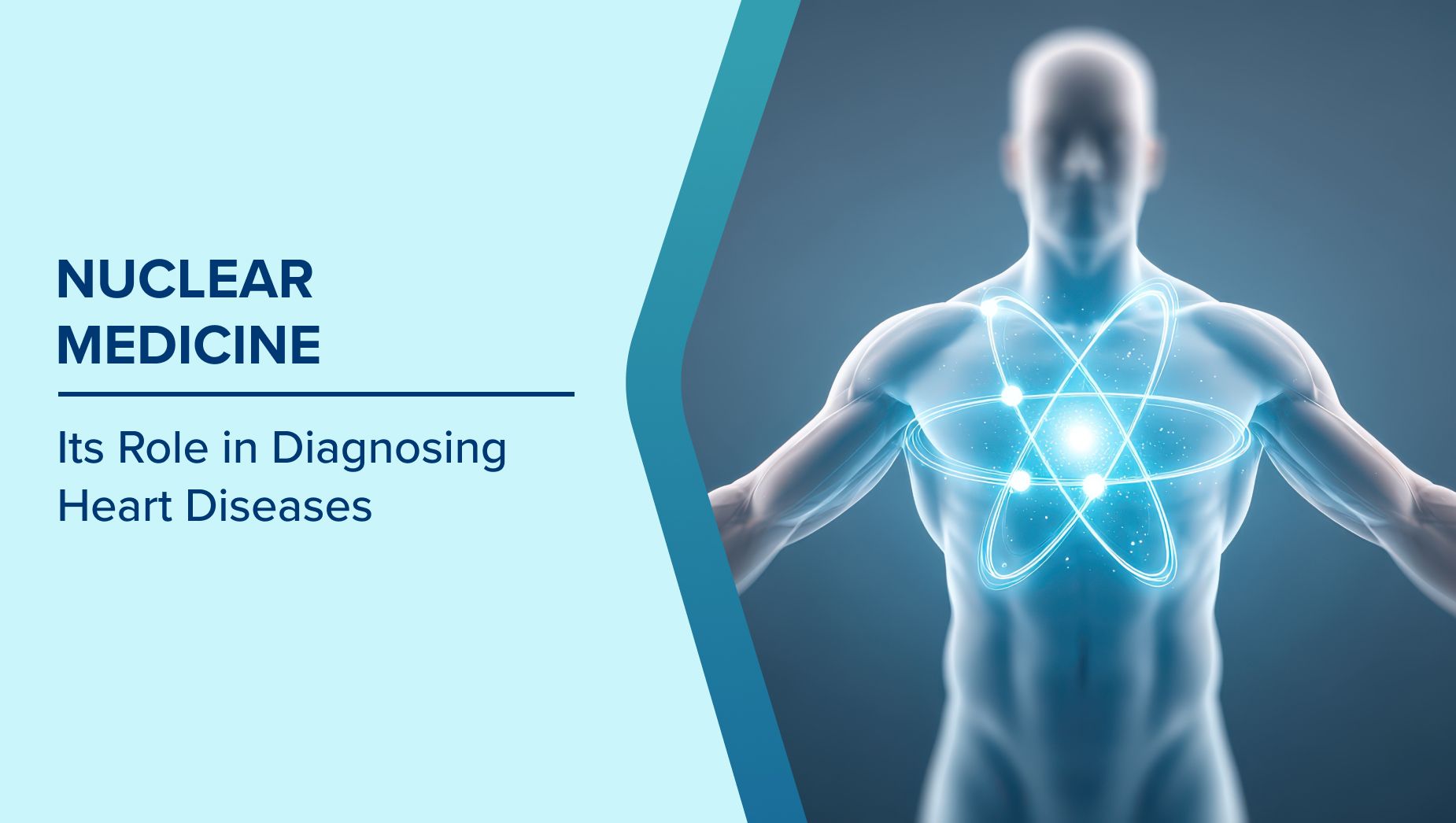
Nuclear medicine is crucial in detecting heart diseases early by showing how well the heart functions and how blood flows through it. Using advanced imaging tests like cardiac PET scans, myocardial perfusion imaging, and nuclear stress tests, doctors can identify coronary artery disease, heart failure, and other cardiac problems even before symptoms become severe. Unlike traditional scans that only show structures, nuclear imaging looks deeper, revealing how the heart muscle works at a cellular level. This makes it one of the most powerful tools in modern cardiology for early and accurate diagnosis.
What Is Nuclear Medicine?
Nuclear medicine is a specialised field of diagnostic imaging that uses small amounts of radioactive materials, known as radiotracers, to study how organs function. When applied to the heart, these tracers help evaluate blood flow, oxygen supply, and heart muscle activity.
The process is simple. A small dose of radiotracer is injected into the bloodstream, which travels to the heart. As it moves, it emits tiny gamma signals captured by imaging cameras such as SPECT (Single Photon Emission Computed Tomography) or PET (Positron Emission Tomography). These signals are converted into detailed images showing how well blood reaches different heart parts.
This type of imaging is especially useful for detecting coronary artery disease, heart muscle damage, or complications from a heart attack.
Common Nuclear Medicine Tests for the Heart
- Myocardial Perfusion Imaging (Nuclear Stress Test): This test checks how well blood flows to the heart muscle during rest and physical activity. It can identify areas with poor circulation and help diagnose coronary artery disease.
- Cardiac PET Scan: A cardiac PET scan produces high-quality, three-dimensional heart images. It is often used to evaluate heart muscle health, detect ischemic heart disease, and guide treatment after a heart attack.
- SPECT Imaging: SPECT scans help doctors assess blood flow patterns and detect damaged or scarred areas of the heart. They are commonly used to evaluate the impact of a past heart attack.
- MUGA Scan (Multigated Acquisition Scan): A MUGA scan measures how well the heart’s lower chambers pump blood. It is often used to monitor cardiac function in patients receiving chemotherapy.
- PET/CT Hybrid Imaging: This combines functional PET imaging with anatomical CT data, giving a complete view of heart structure and function.
How Nuclear Medicine Helps Detect Heart Diseases
Nuclear cardiology gives doctors information that other imaging tests cannot provide. It helps in:
- Detecting blockages early: Even small reductions in blood flow can be identified before major symptoms appear.
- Assessing heart muscle viability: Determines if damaged areas of the heart can still recover.
- Evaluating treatment success: Monitors improvements after stent placement, bypass surgery, or medication.
- Guiding further care: Helps doctors decide whether surgery, medication, or lifestyle changes are necessary.
Nuclear medicine supports personalised and targeted heart care by offering precise insights into heart performance.
Benefits of Nuclear Medicine in Cardiology
- Early detection of heart disease before serious complications occur.
- Accurate functional assessment rather than just structural imaging.
- Non-invasive procedure with minimal discomfort.
- Better treatment decisions based on detailed blood flow and tissue data.
- Monitoring long-term heart health after recovery or intervention.
Safety of Nuclear Imaging
Nuclear scans are considered very safe when performed under medical supervision. The amount of radiation used is minimal and comparable to other diagnostic procedures. The body naturally eliminates the radiotracer through urine or stool within a few hours or days.
Before the Test
- Inform your doctor if you are pregnant or breastfeeding.
- Avoid caffeine or certain medications before a stress test if instructed.
After the Test
- Drink plenty of water to help flush out the tracer.
- Most patients can return to normal activities the same day.
Nuclear Medicine vs Traditional Imaging
Traditional tests like X-rays or echocardiograms show how the heart looks, while nuclear medicine shows how it works. This functional view helps detect early blood flow problems that might not appear on standard imaging. As a result, nuclear cardiology provides deeper insights and helps prevent major heart events through early detection.
Recent Advancements in Nuclear Cardiology
New technologies have made nuclear imaging faster, safer, and more precise.
- Hybrid PET/CT and SPECT/CT scanners combine detailed anatomical and functional data.
- Artificial intelligence enhances image clarity and reduces scan time.
- Lower-dose tracers improve safety for patients.
- Dynamic blood-flow analysis provides real-time evaluation of heart performance.
These innovations are transforming how doctors diagnose and treat heart diseases today.
Importance of Early Detection
Many heart diseases progress silently until symptoms become severe. Early detection using nuclear imaging allows timely treatment, reducing the risk of heart attacks and heart failure. Patients with diabetes, high blood pressure, or a family history of heart disease should consider preventive heart screening when recommended by their cardiologist.
When to Consult a Cardiologist for a Nuclear Scan
A doctor may suggest a nuclear heart scan if you experience:
- Chest pain or discomfort
- Shortness of breath during routine activity
- Unexplained fatigue or palpitations
- A family history of cardiac problems
- Abnormal ECG or echocardiogram results
Conclusion
Nuclear medicine has redefined the way doctors understand and manage heart diseases. By showing both structure and function, it offers unmatched accuracy in detecting coronary artery disease, assessing heart damage, and guiding treatment. The tests are safe, non-invasive, and highly effective for early diagnosis.
If your doctor recommends a nuclear heart scan, it’s an important step toward protecting your cardiac health. With early detection and advanced imaging, timely care can lead to better outcomes and a healthier heart.
Frequently Asked Questions
How long does a nuclear heart test take?
Most nuclear heart scans take about two to four hours, depending on the type of test and the number of imaging phases.
Are there any side effects from the radioactive tracer?
Side effects are rare and mild. You may feel a slight warmth during injection, but the tracer leaves the body naturally within a short period.
What should I do before a nuclear stress test?
Your doctor may ask you to avoid caffeine, smoking, and certain medications before the test to ensure accurate results.
Can nuclear imaging replace angiography?
No, nuclear imaging complements angiography by showing how the heart functions, while angiography directly visualises blocked arteries.
How soon can I resume daily activities after the test?
Most people can return to normal work and routine immediately after the scan unless advised otherwise by their doctor.
Written and Verified by:

Related Blogs

Dr Shashwat Verma In Nuclear Medicine
Nov 30 , 2025 | 8 min read
Blogs by Doctor
PET CT Scan: A Complete Guide to Early Diagnosis and Accurate Disease Detection
Dr Shashwat Verma In Nuclear Medicine
Nov 30 , 2025 | 8 min read
How PET Imaging Improves Cancer Staging: Benefits & Limitations
Dr Shashwat Verma In Nuclear Medicine
Jan 05 , 2026 | 7 min read
Most read Blogs


Related Blogs
Dr Shashwat Verma In Nuclear Medicine
Nov 30 , 2025 | 8 min read
Blogs by Doctor
PET CT Scan: A Complete Guide to Early Diagnosis and Accurate Disease Detection
Dr Shashwat Verma In Nuclear Medicine
Nov 30 , 2025 | 8 min read
How PET Imaging Improves Cancer Staging: Benefits & Limitations
Dr Shashwat Verma In Nuclear Medicine
Jan 05 , 2026 | 7 min read
Most read Blogs