 WhatsApp Us (24/7)
 +91 926 888 0303 (24/7)


To Book an Appointment
Call Us+91 926 888 0303Why Bones Need Calcium: Daily Needs & When to Consult a Doctor
By Dr. Jatinder Bir Singh Jaggi in Orthopaedics & Joint Replacement , Arthroscopy & Sports Injury
May 29 , 2026

Calcium is often the first nutrient people think of when talking about strong bones, and for good reason. It plays a vital role in building bone mass during childhood and adolescence, and in maintaining bone strength throughout adulthood. Yet many people either underestimate their calcium needs or assume that “more is always better.”
At Max Hospital, doctors often see patients who are unsure whether they are getting enough calcium, whether supplements are necessary, and how calcium actually affects long-term bone health.
Why calcium matters for your bones
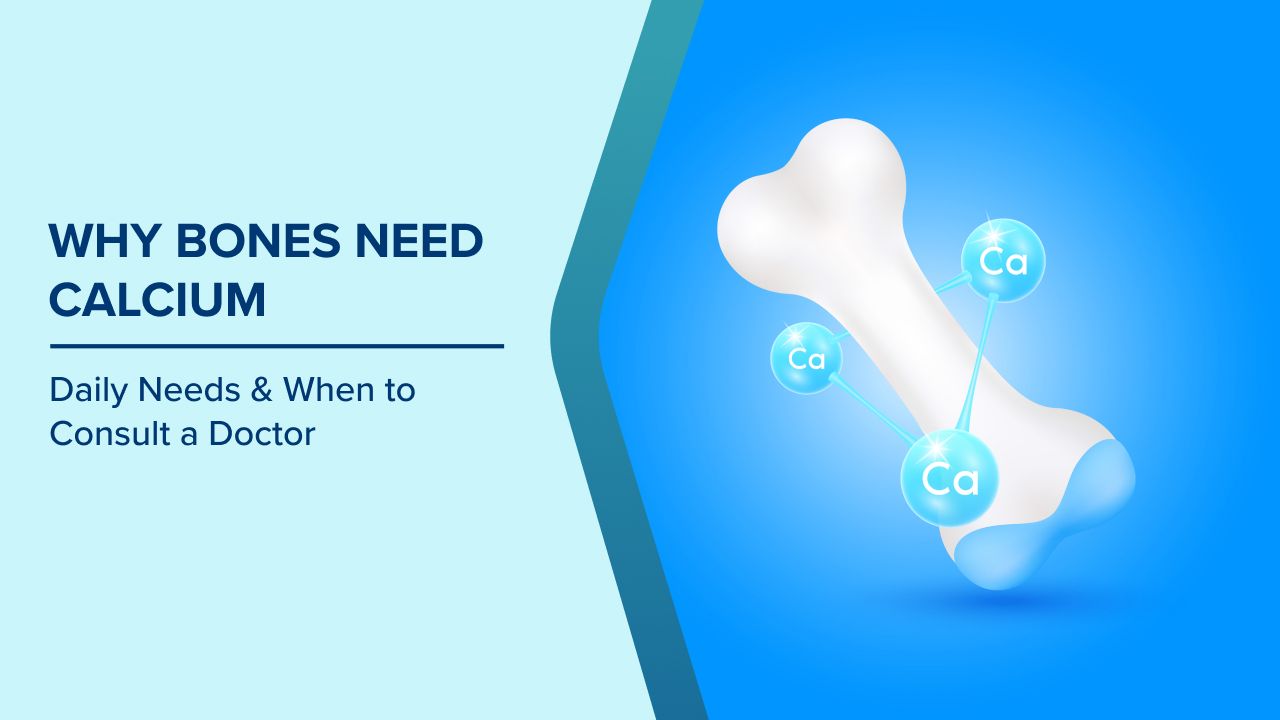
Nearly 99% of the body’s calcium is stored in bones and teeth. Bone is a living tissue that is constantly being broken down and rebuilt. Calcium helps maintain this balance.
When the body does not get enough calcium from food, it may draw calcium from the bones to keep muscles, nerves, and the heart functioning properly. Over time, this can gradually weaken bones and increase the risk of fractures and conditions such as Osteoporosis.
How much calcium do you really need?
Daily calcium requirements vary by age and life stage.
- Adults aged 19–50 years: about 1,000 mg per day
- Women above 50 years: about 1,200 mg per day
- Men above 70 years: about 1,200 mg per day
- Teenagers (9–18 years): about 1,300 mg per day, since bones grow rapidly during these years
Pregnant and breastfeeding women may also need careful evaluation of calcium intake, depending on diet and health status.
Can you get enough calcium from food?
In many cases, yes. Calcium-rich foods can often meet daily needs if included regularly in the diet.
Good dietary sources include:
- Milk, curd, and paneer
- Cheese and fortified dairy alternatives
- Green leafy vegetables such as spinach and fenugreek
- Sesame seeds and almonds
- Ragi
- Soy products such as tofu
A balanced diet often provides calcium more effectively than relying only on supplements.
Do you need calcium supplements?
Not everyone needs supplements. They may be recommended for people who:
- Do not consume enough calcium-rich foods
- Have conditions that affect calcium absorption
- Are at higher risk of bone loss, especially after menopause
- Have been diagnosed with low bone density or Osteoporosis
Taking calcium supplements without medical advice is not always helpful. Very high calcium intake may increase the risk of kidney stones in some individuals.
Calcium alone is not enough
Strong bones depend on more than calcium. Vitamin D is essential because it helps the body absorb calcium properly. Without enough vitamin D, even a calcium-rich diet may not be enough to protect bone health.
Regular weight-bearing activities, such as walking, stair climbing, and light strength training, also help keep bones strong.
When should you consult a doctor?
You should consider medical advice if you have frequent bone or joint pain, a history of fractures after minor falls, poor dietary intake, or a family history of osteoporosis. Early assessment can help prevent long-term bone loss.
The takeaway
Calcium is essential for bone health, but the right amount matters. Too little may weaken bones over time, while taking more than needed does not necessarily offer extra protection.
At Max Hospital, specialists help patients assess calcium needs based on age, diet, lifestyle, and bone health risk, so that prevention starts before problems develop.
Written and Verified by:

Related Blogs


Dr. Ashish Jain In Orthopaedics & Joint Replacement
Nov 07 , 2020 | 1 min read
Blogs by Doctor
Sprained Ankle vs. Rolled Ankle: Understanding the Key Differences
Dr. Jatinder Bir Singh Jaggi In Orthopaedics & Joint Replacement
Feb 13 , 2025 | 7 min read
Arthritis: Debunking Common Misconceptions
Dr. Jatinder Bir Singh Jaggi In Orthopaedics & Joint Replacement , Arthroscopy & Sports Injury
Oct 14 , 2025 | 2 min read
Most read Blogs


Related Blogs
Dr. Ashish Jain In Orthopaedics & Joint Replacement
Nov 07 , 2020 | 1 min read
Blogs by Doctor
Sprained Ankle vs. Rolled Ankle: Understanding the Key Differences
Dr. Jatinder Bir Singh Jaggi In Orthopaedics & Joint Replacement
Feb 13 , 2025 | 7 min read
Arthritis: Debunking Common Misconceptions
Dr. Jatinder Bir Singh Jaggi In Orthopaedics & Joint Replacement , Arthroscopy & Sports Injury
Oct 14 , 2025 | 2 min read
Most read Blogs