 WhatsApp Us (24/7)
 +91 926 888 0303 (24/7)


To Book an Appointment
Call Us+91 926 888 0303Heart Attack Risk: 10 Practical Ways to Reduce It This Winter
By Dr. Naveen Bhamri in Cardiac Sciences , Cardiology , Interventional Cardiology , Cardiac Electrophysiology-Pacemaker
Jan 30 , 2026

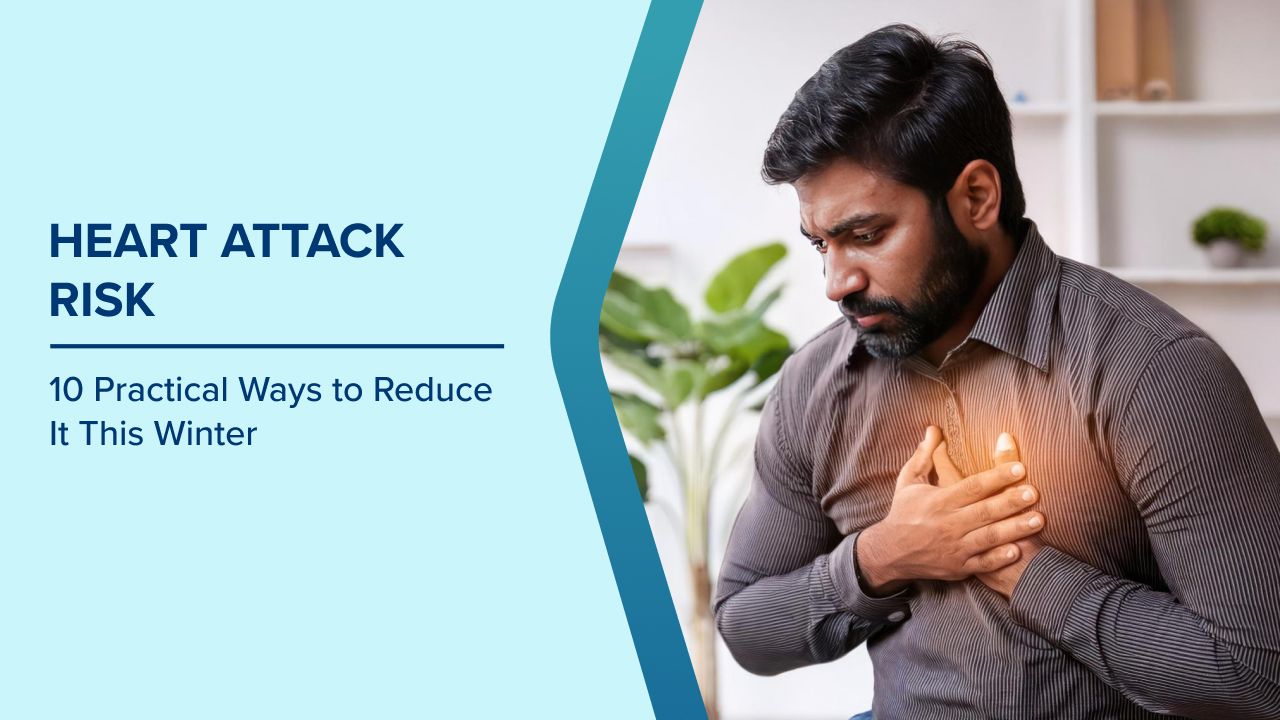
Winter is a challenging season for heart health. Cold temperatures, reduced physical activity, dietary changes, infections, and delayed medical care together increase the risk of heart attacks, especially in people with existing risk factors. Understanding how winter affects the heart and taking practical preventive steps can significantly lower the chances of a cardiac emergency.
What Does Reducing Heart Attack Risk in Winter Mean
Reducing heart attack risk in winter means actively protecting the heart from seasonal triggers that strain the cardiovascular system. Cold weather causes blood vessels to narrow, raising blood pressure and forcing the heart to work harder. Winter routines often include less movement, heavier meals, disrupted sleep, and delayed health checkups. Together, these factors increase the likelihood of heart attacks, particularly in older adults, people with diabetes, high blood pressure, high cholesterol, or a history of heart disease.
Why Heart Attacks Are More Common in Winter
Before discussing prevention, it is important to understand which winter-related factors increase cardiac risk.
How cold weather stresses the heart
- Cold causes blood vessels to constrict, raising blood pressure
- The heart pumps harder to maintain body temperature
- Oxygen demand of the heart increases
- Blood becomes slightly thicker, increasing clot risk
Lifestyle changes during winter
- Reduced physical activity
- Weight gain due to calorie-dense foods
- Increased smoking and alcohol intake
- Poor sleep quality
- Delayed doctor visits
These combined factors explain why winter heart attack rates are consistently higher across populations.
Keep Blood Pressure Under Control in Cold Weather
High blood pressure is one of the strongest predictors of heart attacks, and winter can worsen it.
Why blood pressure rises in winter
- Narrowed blood vessels from cold exposure
- Increased salt intake
- Reduced physical activity
- Missed medications
Practical steps
- Monitor blood pressure at home regularly
- Take prescribed medicines consistently
- Limit salty foods like soups, pickles, and processed snacks
- Stay warm to prevent sudden blood pressure spikes
Keeping blood pressure stable significantly lowers heart attack risk.
Stay Physically Active Even Indoors
Lack of movement during winter quietly increases heart disease risk.
Why inactivity harms the heart
- Raises cholesterol levels
- Worsens blood sugar control
- Promotes weight gain
- Weakens heart muscle efficiency
Safe winter exercise ideas
- Brisk indoor walking
- Light strength training
- Stretching and yoga
- Short activity breaks every hour
Aim for at least 30 minutes of moderate activity most days.
Eat for Heart Health, Not Just Comfort
Winter diets often shift toward comfort foods that increase heart attack risk.
Common winter diet mistakes
- Excess fried and sugary foods
- High saturated fat intake
- Overeating due to reduced activity
Heart-healthy winter eating tips
- Choose warm, home-cooked meals
- Increase vegetables, legumes, and whole grains
- Include healthy fats like nuts and seeds
- Limit red meat and processed foods
Balanced nutrition supports cholesterol control and reduces inflammation.
When to Seek Emergency Care Immediately
Call emergency services if you experience:
- Severe chest pain lasting more than a few minutes
- Sudden shortness of breath
- Fainting or collapse
- Cold sweats with nausea
- Pain spreading to the arm, jaw, or back
Conclusion
Winter places hidden but significant stress on the heart. Cold temperatures, lifestyle changes, infections, and delayed care together raise the risk of heart attacks. Most winter-related heart attacks are preventable with simple and consistent actions such as monitoring blood pressure, staying active, eating wisely, managing stress, and seeking timely medical care.
Frequently Asked Questions
1. Are heart attacks really more common in winter?
Yes. Rates increase due to blood vessel constriction, higher blood pressure, infections, and lifestyle changes.
2. Can cold weather directly cause a heart attack?
Cold weather increases heart workload and may trigger attacks in people with blocked arteries.
3. Who is most at risk?
Adults over 50, people with diabetes, hypertension, high cholesterol, smokers, and those with prior heart disease.
4. Is chest pain in winter always heart-related?
Not always, but it should never be ignored and must be medically evaluated.
5. How fast should I seek help?
Immediately. Early treatment saves heart muscle and lives.
Written and Verified by:

Related Blogs

Dr. Ritwick Raj Bhuyan In Cardiac Sciences , Cardiac Surgery (CTVS)
Nov 08 , 2020 | 2 min read

Dr. Gaurav Minocha In Cardiac Sciences
Nov 08 , 2020 | 4 min read
Blogs by Doctor

Rise in cases of asymptomatic heart attacks amongst middle aged people
Dr. Naveen Bhamri In Cardiac Sciences
Nov 08 , 2020 | 4 min read

What Do You Need to Know About Primary and Secondary Prevention Of CAD?
Dr. Naveen Bhamri In Cardiac Sciences
Nov 08 , 2020 | 2 min read
Most read Blogs


Related Blogs
Dr. Ritwick Raj Bhuyan In Cardiac Sciences , Cardiac Surgery (CTVS)
Nov 08 , 2020 | 2 min read
Dr. Gaurav Minocha In Cardiac Sciences
Nov 08 , 2020 | 4 min read
Blogs by Doctor
Rise in cases of asymptomatic heart attacks amongst middle aged people
Dr. Naveen Bhamri In Cardiac Sciences
Nov 08 , 2020 | 4 min read
What Do You Need to Know About Primary and Secondary Prevention Of CAD?
Dr. Naveen Bhamri In Cardiac Sciences
Nov 08 , 2020 | 2 min read
Most read Blogs