 WhatsApp Us (24/7)
 +91 926 888 0303 (24/7)


To Book an Appointment
Call Us+91 926 888 0303Why Handwriting Becomes Smaller in Parkinson’s: Early Sign & Micrographia
By Dr. Rajneesh Kummar in Neurosciences , Neurology
May 15 , 2026

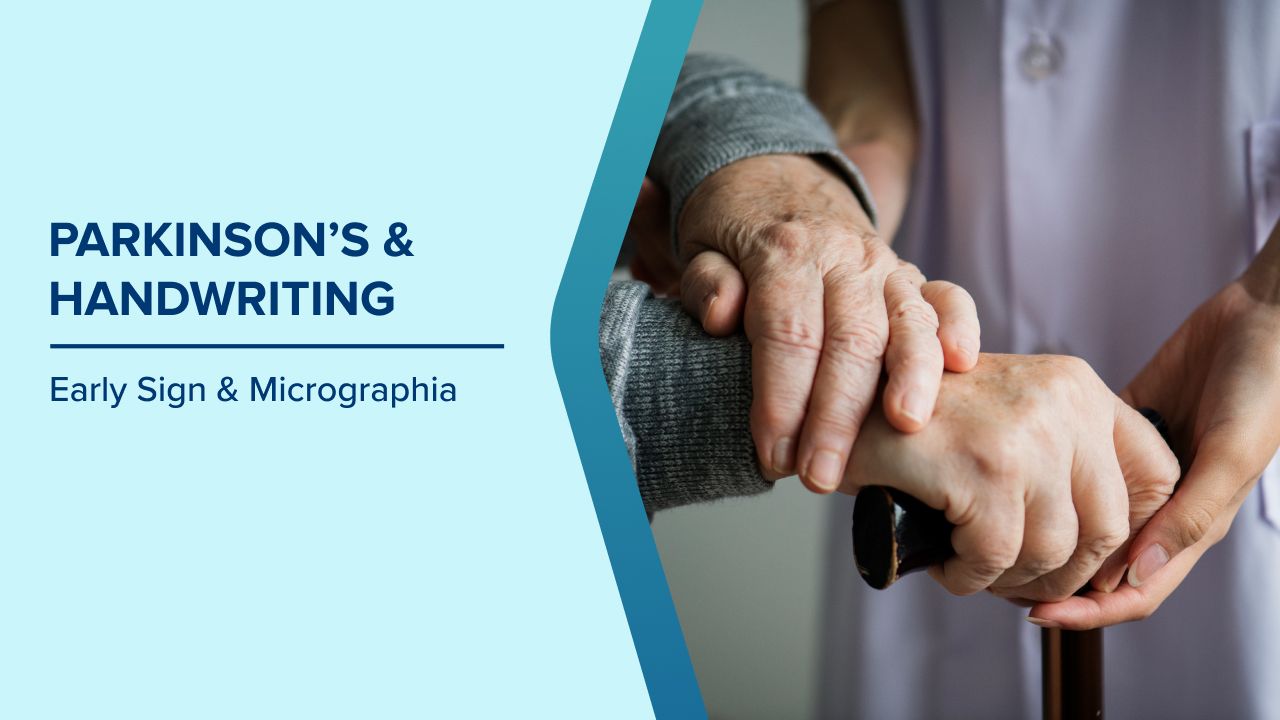
One of the lesser-known but highly noticeable early signs of Parkinson’s disease is a gradual change in handwriting. Many individuals begin to notice that their writing becomes unusually small, cramped, and difficult to read over time.
This change, known medically as micrographia, is not just a handwriting issue. It reflects bigger changes in how the brain controls movement. For some, it may even be one of the first visible clues that something is not functioning as it should.
Understanding why handwriting becomes smaller in Parkinson’s can help individuals recognise early signs, seek timely evaluation, and better manage the condition.
What Is Micrographia?
Micrographia refers to abnormally small, cramped handwriting that often worsens as a person continues to write.
Common characteristics include:
- Letters becoming progressively smaller across a sentence
- Words appearing crowded or tightly spaced
- Difficulty maintaining consistent letter size
- Writing that becomes harder to read over time
Unlike normal variations in handwriting, micrographia tends to follow a pattern and is often linked to neurological changes rather than habit or style.
The Brain’s Role in Writing Movements
Writing may seem like a simple activity, but it actually involves a complex coordination of multiple brain functions.
Key processes involved:
- Planning the movement (in the brain’s motor cortex)
- Regulating movement size and speed (via deeper brain structures)
- Sending signals to hand muscles
- Adjusting grip, pressure, and coordination in real time
In Parkinson’s, this finely tuned system becomes disrupted, particularly in areas responsible for movement control and scaling.
Read More: Early Diagnosis of Parkinson's Disease – A Diagnostic Challenge
Why Does Handwriting Become Smaller in Parkinson’s?
Reduced Dopamine Levels
At the core of Parkinson’s is a decline in dopamine, a chemical messenger that helps regulate movement.
How this affects handwriting:
- Movements become slower and smaller
- The brain struggles to maintain the intended size of actions
- Fine motor control becomes less precise
Writing requires continuous, controlled movements. When dopamine levels drop, the ability to sustain these movements at a normal scale is reduced.
Difficulty in “Scaling” Movements
One of the key issues in Parkinson’s is the inability to properly scale movements.
What this means:
- The brain underestimates how big a movement should be
- Actions that should be large become small and restricted
This is why:
- Steps may become shorter while walking
- Facial expressions may reduce
- Handwriting becomes progressively smaller
Micrographia is essentially a reflection of this broader movement problem.
Bradykinesia (Slowness of Movement)
Bradykinesia, or slowed movement, is a hallmark feature of Parkinson’s.
Its impact on writing:
- Writing becomes slower and more effortful
- Reduced speed leads to tighter, more constrained strokes
- The natural flow of handwriting is lost
As writing slows down, the size of letters often reduces unintentionally.
Muscle Rigidity
Muscle stiffness is another common symptom.
How rigidity affects handwriting:
- Reduced flexibility in hand and finger movements
- Difficulty in making smooth, fluid strokes
- Increased effort required to write
This stiffness can cause writing to appear cramped and uneven.
Fatigue During Repetitive Movement
Many people with Parkinson’s notice that handwriting starts normally but becomes smaller as they continue writing.
Why does this happen?
- Repetitive movements become harder to sustain
- Muscle control declines with continued effort
- The brain’s signalling weakens over time
This is why micrographia often becomes more noticeable across a line or paragraph.
Impaired Automatic Movements
Writing is usually an automatic task that does not require conscious effort.
In Parkinson’s:
- Automatic movements become impaired
- Tasks require more conscious control
- Consistency becomes difficult to maintain
As a result, handwriting may start normally but gradually lose size and clarity.
Is Smaller Handwriting an Early Sign of Parkinson’s?
Micrographia can appear before more obvious symptoms, such as tremors or noticeable stiffness.
Early indicators may include:
- Gradual reduction in handwriting size over weeks or months
- Difficulty maintaining consistent writing
- Increased effort required for writing tasks
However, it is important to note that not all small handwriting indicates Parkinson’s. Other factors, such as ageing, stress, or certain medications, can also affect writing.
Persistent and progressive changes, however, should not be ignored.
How Is Micrographia Different from Normal Handwriting Changes?
Many people experience occasional changes in handwriting due to fatigue or hurried writing.
Key differences in Parkinson’s-related micrographia:
- Progressive worsening over time
- Consistent pattern of shrinking letters
- Occurs even when writing slowly and carefully
- Often accompanied by other subtle motor changes
This pattern helps distinguish it from everyday variations.
How Parkinson’s Affects Fine Motor Skills
Handwriting is a fine motor skill, requiring precise control of small muscles.
Parkinson’s can affect:
- Finger dexterity
- Grip strength and control
- Hand-eye coordination
- Speed and rhythm of movement
These changes extend beyond handwriting and may also affect:
- Buttoning clothes
- Using utensils
- Typing or handling small objects
Micrographia is often one of the earliest noticeable signs of this broader impact.
Can Handwriting Improve with Treatment?
While Parkinson’s is a progressive condition, certain treatments and strategies can help improve handwriting.
Medical management:
- Medications that increase or mimic dopamine can improve motor control
- Adjustments in treatment may help reduce symptoms
Practical strategies:
- Writing slowly and consciously
- Using lined or larger-spaced paper
- Practising handwriting exercises
- Taking breaks to reduce fatigue
Therapy support:
- Occupational therapy can help improve fine motor skills
- Special techniques may be taught to maintain writing size
Improvement varies from person to person, but early intervention can make a meaningful difference.
When Should You Be Concerned?
It may be time to seek medical advice if:
- Handwriting has become noticeably smaller over time
- Writing becomes difficult or tiring
- Other symptoms appear, such as stiffness, tremors, or slowed movement
- Daily tasks involving the hands feel harder than before
Early evaluation allows for timely diagnosis and better management of symptoms.
Why Early Recognition Matters
Recognising subtle signs like micrographia can play an important role in early detection.
Benefits of early identification:
- Earlier diagnosis and treatment
- Better symptom management
- Improved quality of life
- Slower progression of functional difficulties
Small changes, when noticed early, can lead to significant benefits in long-term care.
Conclusion
Smaller handwriting in Parkinson’s is more than a minor inconvenience. It is a visible reflection of how the condition affects movement control at a neurological level.
Micrographia highlights the brain’s reduced ability to regulate movement size, speed, and coordination. While it may begin subtly, it often follows a clear and progressive pattern.
Understanding this change helps individuals recognise early signs, seek timely medical advice, and take steps to manage symptoms effectively. Paying attention to these small but meaningful changes can make a significant difference in overall care and quality of life.
Frequently Asked Questions
1. Does everyone with Parkinson’s develop small handwriting?
No, but micrographia is a common symptom and may appear in many individuals at different stages of the condition.
2. Can small handwriting be reversed?
It may improve with treatment and therapy, but it may not completely return to previous levels.
3. Is micrographia always an early sign of Parkinson’s?
It can be an early sign, but it may also develop later. It varies between individuals.
4. Can stress or ageing cause similar handwriting changes?
Yes, but these changes are usually temporary or inconsistent, unlike the progressive pattern seen in Parkinson’s.
5. Should I see a doctor if my handwriting changes?
If the change is persistent, progressive, or accompanied by other symptoms, it is advisable to seek medical evaluation.
Written and Verified by:

Related Blogs

Dr. Chandril Chugh In Neurosciences , Interventional Neurology
Nov 08 , 2020 | 1 min read

Dr. Chandril Chugh In Neurosciences , Interventional Neurology
Nov 08 , 2020 | 2 min read
Blogs by Doctor

What is Stroke: Types, Symptoms & Risk Factors
Dr. Rajneesh Kummar In Neurosciences , Neurology
Nov 21 , 2024 | 6 min read

What is Headaches: Causes, Preventions & How to Find Relief
Dr. Rajneesh Kummar In Neurosciences , Neurology
Jan 10 , 2025 | 4 min read
Most read Blogs


Related Blogs
Dr. Chandril Chugh In Neurosciences , Interventional Neurology
Nov 08 , 2020 | 1 min read
Dr. Chandril Chugh In Neurosciences , Interventional Neurology
Nov 08 , 2020 | 2 min read
Blogs by Doctor
What is Stroke: Types, Symptoms & Risk Factors
Dr. Rajneesh Kummar In Neurosciences , Neurology
Nov 21 , 2024 | 6 min read
What is Headaches: Causes, Preventions & How to Find Relief
Dr. Rajneesh Kummar In Neurosciences , Neurology
Jan 10 , 2025 | 4 min read
Most read Blogs